

Belt Drive vs Chain Drive Garage Door Openers (2026 Comparison)
February 16, 2026
- By
- DoorX Garage Door Repair
- Garage Door Specialists
Belt Drive vs Chain Drive Garage Door Openers (2026 Comparison) – which option truly makes sense for your home, and how does your choice impact more than just daily noise levels? At DoorX Garage Door Repair, we have spent years helping homeowners select and install the right garage door openers, and we have consistently seen how choosing the wrong drive system can lead to unnecessary frustration. When you are researching a new garage door opener, it is important to understand how each mechanism operates and how it performs over time. A chain drive uses a metal chain to move the door along the rail, while a belt drive relies on a reinforced rubber belt. That structural difference affects vibration, smoothness, and long term reliability. We have seen homeowners replace a nearly new opener simply because it created too much noise in a bedroom above the garage. The drive system you choose influences sound levels, required maintenance, durability, and even how rollers, springs, and tracks experience wear over the years.
Durability, Value, and Professional Installation Standards
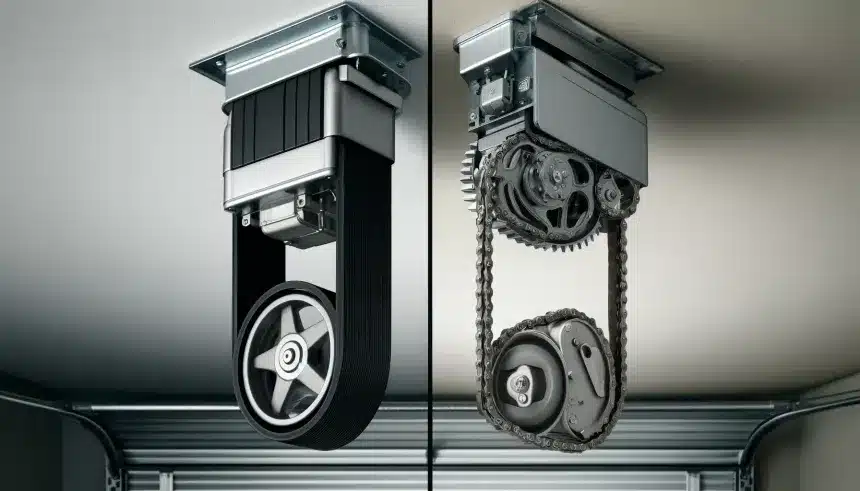
When durability and budget are the top priorities, chain drive openers remain a practical choice. The key to long-term performance is proper installation, correct chain tension, and periodic lubrication with the right products. Chain drives use a metal chain running over a sprocket and rail assembly. They’re mechanically straightforward and well-suited for heavier doors, including insulated double-wide steel models. In detached garages where noise isn’t a concern, they perform reliably for years. Professional installation should include:
- Correct header bracket anchoring into structural framing, not drywall
- Precise chain tension – tight enough to avoid sag, loose enough to prevent binding
- Force and travel limit calibration per manufacturer specs
- Safety sensor alignment compliant with UL 325

Performance, Cost, Maintenance, and Best-Fit Scenarios
Choosing between belt and chain systems comes down to how you use your garage and what trade-offs you’re willing to accept. We walk homeowners through a structured comparison during consultations.
Cost for a professionally installed opener may range from $450 to $900 for chain drive and $600 to $1,200 for belt drive, depending on motor horsepower (½ HP vs ¾ HP DC), site complexity, material costs, and total scope. Installation usually takes 3 – 5 hours including removal of the old unit and programming remotes using steps similar to those outlined in our program garage door opener guide. One client chose a chain unit for a finished garage beneath a nursery. Within months, they requested an upgrade due to sleep disruption. The additional labor doubled their overall cost – proof that matching the opener to the home layout matters. Which should you choose?
| Criteria | Belt Drive | Chain Drive |
|---|---|---|
| Noise Level | Very quiet; minimal vibration | Louder; metal-on-metal contact |
| Upfront Cost | Typically higher | Typically lower |
| Maintenance | Low; belt tension checks | Moderate; lubrication & tension |
| Durability | Long-lasting with proper install | Highly durable, especially for heavy doors |
| Best For | Attached garages, quiet homes | Detached garages, budget installs |
- Choose belt drive if noise control and smooth motion are priorities.
- Choose chain drive if budget and heavy-door durability matter most.
- If unsure, consider door weight, ceiling height, and room placement above the garage.
Not Sure Which Opener Fits Your Home?
If you are weighing belt vs chain and want a clear, confident recommendation, now is the time to talk with the experts at DoorX Garage Door Repair. The right opener impacts your home’s comfort, security, and daily convenience. Our team carefully evaluates door weight, track condition, ceiling structure, and how your garage connects to your living space before recommending the ideal solution. We match the drive system to your layout, budget, and usage habits – not just the lowest price available. A quick professional assessment can save you from costly repairs, excessive noise, and premature wear. Whether you want whisper-quiet performance, heavy-duty durability, or low long-term maintenance, we will guide you step by step with honest, pressure-free advice. Do not wait until your opener fails at the worst possible moment. Call DoorX Garage Door Repair today and get the reliable performance and peace of mind your home deserves.

FAQs
Is a belt drive really quieter than a chain drive opener?
Yes, and the difference is especially noticeable in attached garages where sound easily travels into living spaces. Belt drive openers use reinforced rubber or polyurethane belts instead of metal chains, eliminating the metal-on-metal contact common in chain systems. This significantly reduces vibration and limits the amount of noise transferred into ceiling joists, shared walls, and adjacent rooms. In homes with bedrooms or offices located above the garage, this can mean the difference between a soft, steady hum and a disruptive rattling sound that interrupts sleep or daily activities. That said, overall noise levels depend on more than just the drive type. Proper door balance, track alignment, roller quality, and motor design all play critical roles. A poorly balanced or misaligned door forces the opener to work harder, increasing strain and operational noise regardless of drive system. During installation, we inspect spring tension, hinges, and rollers to ensure the door moves smoothly and efficiently. If quiet performance is your top priority, a belt drive opener paired with a DC motor and soft start technology is typically the most reliable and comfortable solution.
Which opener lasts longer: belt or chain?
Both systems can last for many years when they are properly installed, adjusted, and maintained on a consistent schedule. Chain drive openers have a long standing reputation for durability, especially when paired with heavier steel doors or insulated double doors that place greater demand on the lifting mechanism. The solid metal chain is designed to tolerate high loads and repeated daily use without significant wear when correctly tensioned. Belt drive systems also deliver impressive longevity, particularly modern models that use reinforced rubber belts with embedded fiberglass cords for added strength and reduced stretching over time. In most cases, overall lifespan depends less on the drive type and more on maintenance and correct setup. An overtightened chain, loose belt, or misaligned rail can strain internal gears and motor components, leading to premature failure. We recommend annual inspections that include checking chain or belt tension, testing the safety reversal system, verifying track alignment, and applying lubrication where required. Proper door balance is also essential. When the opener is correctly sized, typically 1/2 HP for single doors and 3/4 HP for heavier double doors, either system can provide dependable and long lasting performance.
How much does it cost to install a belt or chain garage door opener?
Professional installation costs typically range from $450 to $900 for a chain drive opener and $600 to $1,200 for a belt drive system. Final pricing depends on several factors, including site complexity such as ceiling height, accessibility of existing wiring, and the condition of structural anchoring points. Material selection also plays a significant role, including motor horsepower, rail construction, vibration control components, and the addition of smart connectivity features. The overall scope of work may involve removal and disposal of the old opener, installation of new wall controls, wireless keypads, safety sensors, and programming of remotes and vehicle integration systems. Homes with finished ceilings, tight attic access, or outdated electrical configurations may require additional preparation and labor. Standard installations are usually completed within 3-5 hours, but upgrades such as installing a dedicated outlet, reinforcing header brackets, or correcting track alignment can extend the timeline. These price ranges are general benchmarks provided for informational purposes only and do not represent a binding estimate. A detailed on-site assessment is necessary to provide an accurate and finalized proposal tailored to your specific garage setup.
Can homeowners install a garage door opener themselves?
Some mechanically inclined homeowners can install a garage door opener if the door is properly balanced and the structural framing above the opening is solid and accessible. A well balanced door should lift smoothly by hand and stay in place when raised halfway. If the door is heavy or uneven, the opener will be strained and may fail prematurely. Careful attention must be given to mounting the header bracket securely into structural framing, not just drywall or trim. Incorrect attachment can cause the rail to loosen or detach under load. Travel limits and force settings must also be calibrated precisely to prevent damage or unsafe closing pressure. UL 325 safety standards require properly functioning photoelectric sensors and auto reverse features, and these components must be aligned and tested carefully. We have seen do it yourself installations where safety sensors were misaligned or lag bolts were fastened into weak backing, creating serious hazards. If you choose to proceed on your own, follow the manufacturer instructions step by step, verify spring balance first, and test the reversal system using a 2×4 board under the door. When structural reinforcement, electrical wiring, or outlet installation is required, professional installation is typically the safer and more reliable option.
What maintenance do belt and chain openers require?
Chain drive openers require regular lubrication to perform reliably and quietly. Apply a lithium based garage door lubricant to the chain every few months to minimize friction, reduce wear, and protect against rust buildup. Avoid using heavy grease, as it can attract dirt and cause premature wear. Belt drive systems, on the other hand, do not require lubrication on the belt itself. However, you should inspect belt tension and confirm that the rail remains properly aligned at least once a year. Loose or misaligned components can strain the motor and shorten the lifespan of the opener. For both chain and belt systems, test the auto reverse safety feature every month by placing a sturdy object such as a piece of wood under the door. The door should reverse immediately upon contact. Also check that the photo eye safety sensors are aligned and free of dust or debris. Pay attention to unusual grinding sounds, popping noises, or excessive vibration, as these can signal worn gears or loose hardware. Maintaining proper door balance is essential, since the opener is designed to guide the door rather than carry its full weight. Regular inspections help prevent costly repairs and extend system life.
What are the most common problems with these openers?
Common issues with garage door openers often begin with worn drive gears, loose chains, stretched belts, misaligned safety sensors, or incorrect travel limit settings. Over time, chain drive systems can develop noticeable sag if proper tension is not maintained, which may result in noisy, jerky, or inconsistent door movement. Belt drive systems, while typically quieter, can experience slippage or reduced lifting power when the belt becomes worn or loses proper alignment. Electrical components are also subject to failure. Aging capacitors in AC motors may cause slow starts or humming sounds, and deteriorating logic boards can lead to intermittent operation or complete shutdown. In many cases, the opener itself is not the root cause of the problem. Underlying door issues such as worn rollers, bent tracks, poor lubrication, or unbalanced springs place excess strain on the motor and drive system. This added stress accelerates component wear and increases the likelihood of breakdown. Routine inspection, lubrication, and precise calibration of both the opener and door system greatly reduce unexpected failures and extend overall equipment lifespan.
What should I look for when hiring a garage door professional?
Look for a contractor who understands UL 325 safety requirements and follows DASMA guidelines for proper door and opener compatibility. An experienced professional should begin by inspecting the condition and balance of the garage door before installation, since an unbalanced door can strain the opener and reduce its lifespan. They should secure all mounting hardware directly into structural framing members rather than drywall or unsupported surfaces. Always confirm that the company carries valid insurance and any required local licensing for your area. Ask whether the installer tests and documents force settings, auto reverse sensitivity, and photo eye sensor performance as part of the installation process. A qualified technician will clearly explain horsepower sizing, rail options, drive types, and warranty coverage so you understand what you are purchasing. Avoid contractors who skip sensor alignment checks or rush through programming without confirming smooth and quiet door travel. Transparent pricing, written estimates, and a detailed post installation walkthrough are strong indicators of careful and professional service.
When should I replace my garage door opener instead of repairing it?
Consider replacing your garage door opener if the motor repeatedly stalls, the logic board fails, or the unit lacks modern safety features such as monitored photo eyes and auto reverse sensors. Openers manufactured prior to current UL 325 safety updates may not comply with today’s standards, which are designed to reduce the risk of injury and property damage. Frequent breakdowns, excessive vibration, grinding sounds, or stripped internal gears often indicate that continued repairs will become more expensive than investing in a new system. If the door hesitates during operation, reverses unpredictably, or struggles to open and close even though it is properly balanced, a professional evaluation is strongly recommended. Aging components can place added strain on the motor and rail assembly, leading to premature failure. While these issues do not always require emergency service, warning signs such as unusual noises, a burning smell, flickering lights on the opener unit, or visible rail separation should prompt you to disconnect the opener and operate the door manually until it is inspected. Early assessment helps prevent further mechanical damage and improves overall safety and reliability.