How Orlando’s Heat and Humidity Damage Garage Doors
Humid mornings, hot afternoons, storms and strong sun work on your door every day. Most homeowners don’t see it coming.
- ~74%average relative humidity, all year
- 90s°Ftypical summer afternoon highs
- Dailyheat cycles that expand and contract metal
- High UVamong the strongest sun in the continental U.S.
Why Orlando Is a Different Category
Most garage door parts are rated for average U.S. conditions. Orlando is not average.
Orlando sits in a humid subtropical climate, with high humidity from January through December. It isn’t just the heat or the rain, it’s the daily cycling: temperatures climb past 90°F in summer afternoons and fall back overnight.
Metal expands, contracts and fatigues faster. Rubber seals soften in the heat and stiffen in the cool. Wood soaks up morning moisture and dries out by midday. That’s why maintenance here needs more attention than the manufacturer’s sticker suggests.
Which Parts Fail First in Florida’s Climate
The wear follows a predictable order. Knowing it tells you where to look and when to act.
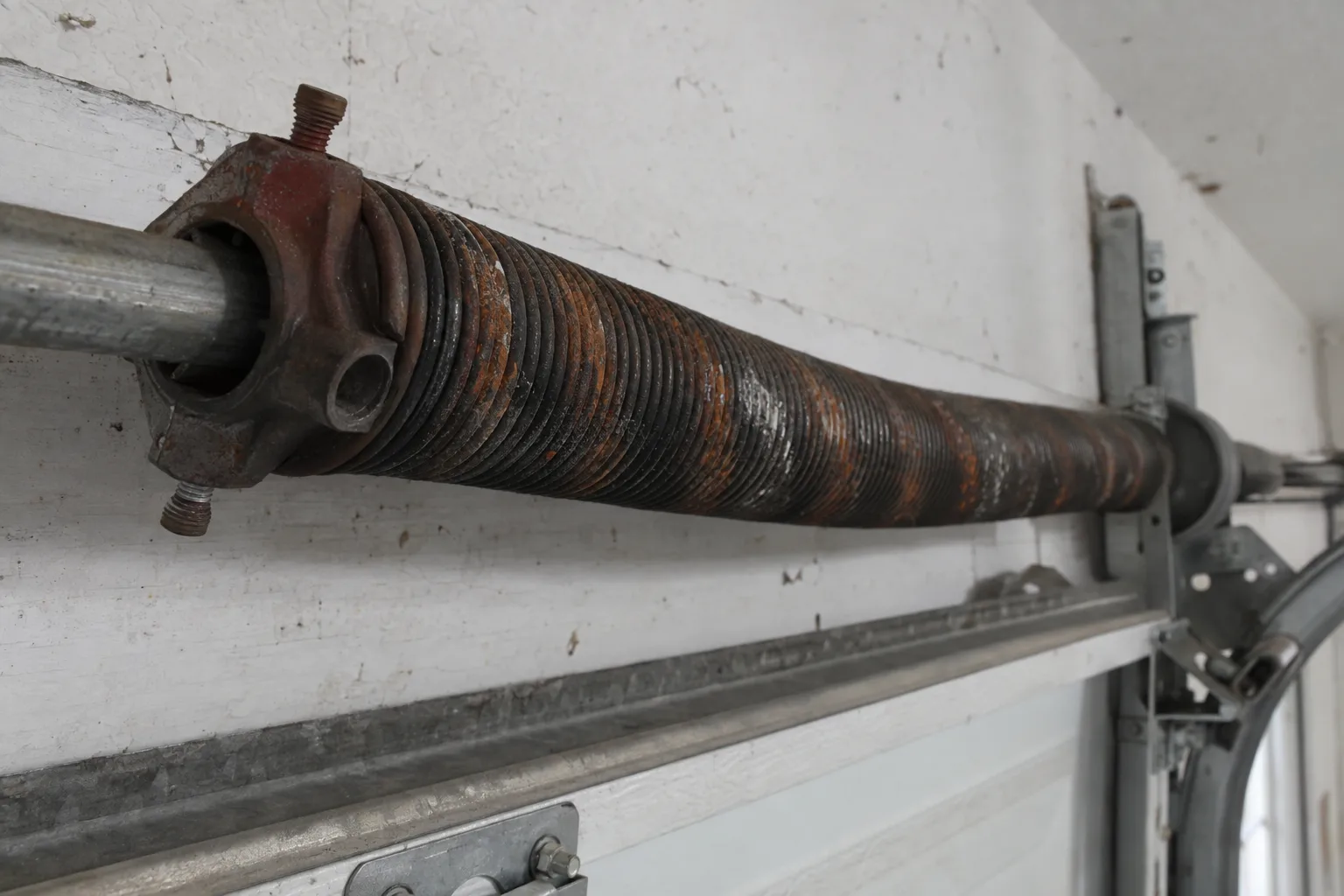
Torsion spring corrosion
Humidity causes surface rust and internal fatigue in the springs. Rust creates friction inside the coil, which adds load every cycle, and manufacturers’ cycle ratings assume drier conditions than Orlando’s.
Weather seal breakdown
UV and heat break down the rubber or vinyl bottom and side seals. The bottom seal stops compressing evenly, gaps open, and ground-level water and pests get in.
Wood door warping
Wood panels soak up moisture on humid mornings and dry out in the midday sun. Panels that swell out of shape bind in the track, which strains the opener and springs.
Panel and finish UV damage
Finishes on steel and aluminum doors oxidize and fade. Once the factory coating breaks down, corrosion starts at edges, fastener holes and thin spots.
What This Looks Like on Real Orlando Homes
Three common situations with one root cause: maintenance schedules built for average U.S. weather, not Orlando’s.
Springs that have never been replaced
A home built about ten years ago still has its original torsion springs, never lubricated or treated for corrosion. After a decade of Orlando humidity, they’re carrying hidden fatigue well past what the rating assumed.
A three-year-old wood door
The owner followed the manufacturer’s maintenance guide and had it inspected once. The bottom seal is cracked and no longer meets the floor, and moisture is reaching the lower panel.
A steel door after four summers
The finish has oxidized across the upper panels, and small rust spots are forming near the bottom bracket fasteners, where the coating is thinnest.
How Often to Service a Door Here
The repairs we see most often started as maintenance that got put off. A spring that needed lubrication and corrosion treatment two years ago is a spring replacement now.
- Steel door with torsion springsPlan on at least one inspection a year, especially with south or west sun exposure.
- Wood garage doorEvery eight to ten months is more realistic.
- Weather sealsCheck them every time the door is serviced.
When to Call a Professional
- Surface rust anywhere on the spring systemRust you can see has already gone below the surface.
- A bottom seal that doesn’t meet the floor evenlyAny gap means heat and UV have already broken down its shape.
- Wood panels out of flush alignmentWarping that binds in the track is no longer cosmetic.
- Fading plus changes near fasteners or edgesUV damage is reaching the metal underneath.
Services for Climate Wear
Where these problems usually lead, and how we fix them.
Garage Door Service Across Orlando
We’re a service-area business, so we come to you. Call to confirm your address.
Orlando neighborhoods
- Conway
- Hunters Creek
- Lake Nona
- Dr. Phillips
Nearby cities
- Windermere
- Ocoee
- Winter Park
- Winter Garden
- Apopka
- Kissimmee
Heat, Humidity and Your Garage Door
How often should a garage door be inspected in Orlando?
For a steel door with torsion springs, plan on at least one inspection a year, especially with south or west sun exposure. Wood doors do better with a check every eight to ten months.
Why do garage door springs rust so fast in Florida?
Orlando’s relative humidity averages around 74% year-round, so the steel coils are rarely dry. Without lubrication and corrosion treatment, surface rust turns into internal fatigue and early failure.
Is a gap under my garage door a problem?
Yes. If the bottom seal doesn’t meet the floor evenly, heat and UV have already broken down its shape, and water and pests can get in. Replacing the seal is a quick fix.
Are wood garage doors a bad idea in Orlando?
They can work, but they need more attention here. Humid mornings and hot afternoons make wood swell and shrink, and warped panels can bind in the track, so plan on more frequent inspections.
Is fading paint on a steel garage door just cosmetic?
Not always. If you also see discoloration or texture changes near fasteners or panel edges, UV has broken down the protective coating and the steel underneath can start to rust.
Does This Sound Like Your Door?
If something here matches what you’re seeing, call DoorX. You don’t need a diagnosis first. Describe what you see and we’ll take it from there.
Open 24 hours, 7 days a week